Director
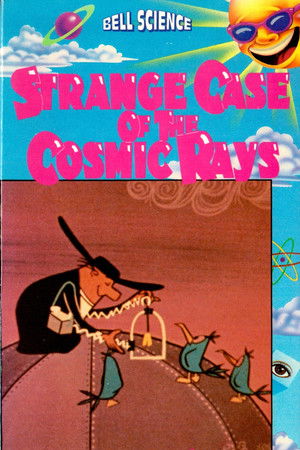
Culhane worked for a number of American animation studios, including Fleischer Studios, the Ub Iwerks studio, Walt Disney Productions, and theWalter Lantz studio. He began his animation career in 1925 working for J.R. Bray studios, and is known for promoting the animation talents of his inker/assistant at the Fleischer Studios in the early 1930s, Lillian Friedman Astor, making her the first female studio animator. While at the Disney studio, he discovered while working on Hawaiian Holiday's crab sequence an animation method that involved stewing for multiple days, before drawing the entire thing in rough sketches all at once, straight ahead, without invoking the left side of the brain. He was a lead animator on Snow White and the Seven Dwarfs, animating arguably the most well-known sequence in the film, the animation of the dwarves marching home singing "Heigh-Ho". The scene took Culhane and his assistants six months to complete. During this time he developed his 'High-speed' technique of using only the right side of the brain and animating with quick dashed-off sketches. In 1944, he collaborated on The Greatest Man in Siam with the layout artist Art Heinemann. In that animation, "the king of Siam bolts past doorways that are distinctly phallic in shape and peers at another that mimics a vagina."[3] Later in his career, Culhane worked briefly in Chuck Jones's unit at Warner Bros, before moving on to being a director for Lantz, where he helmed Woody Woodpecker's 1944 classic, The Barber of Seville, the cartoon famous for one of the first uses of fast cutting, after taking the idea from Sergei Eisenstein. At Lantz, he introduced Russian avant-garde influenced experimental art into the cartoons. In the late-1940s, he founded Shamus Culhane Productions (Culhane had gone by his birthname of James up until this point, before going by its Irish variant Shamus), one of the first companies to create animated television commercials. It also produced the animation for at least one of the Bell Telephone Science Series films. Shamus Culhane Productions folded in the 1960s, at which point Culhane became the head of the successor to Fleischer Studios, Paramount Cartoon Studios. He left the studio in 1967, and went into semi-retirement. Culhane wrote two highly regarded books on animation: the how-to/textbook Animation from Script to Screen, and his autobiography Talking Animals and Other People. Since Culhane worked for a number of major Hollywood animation studios, his autobiography gives a balanced general overview of the history of the Golden Age of American Animation. At his death on February 2, 1996, Culhane was survived by second wife, the former Juana Hegarty, and by two sons from his first marriage to Maxine Marx (the daughter of Chico Marx) which ended in divorce: Brian Culhane of Seattle and Kevin Marx Culhane of Portland, Ore. -From Wikiepedia